After the discovery of the first battery, no one knew exactly what flowed through a conductor.
That was the key question at the beginning of the 19th century.
Two Italians – Luigi Galvani and Alessandro Volta – responsible for the first reliable source of electrical energy, actually had no idea what was passing through the wire. Neither did Napoleon Bonaparte when, fascinated by the first electrical experiments, declared: “This is the beginning of a new era.”
Everyone saw the flow of electric current – but no one saw the cause.
Only later, with the development of modern physics and the discovery of atomic structure, was the mystery solved. It wasn’t some mysterious force or unknown fluid passing through the wire – but tiny, negatively charged particles – electrons.
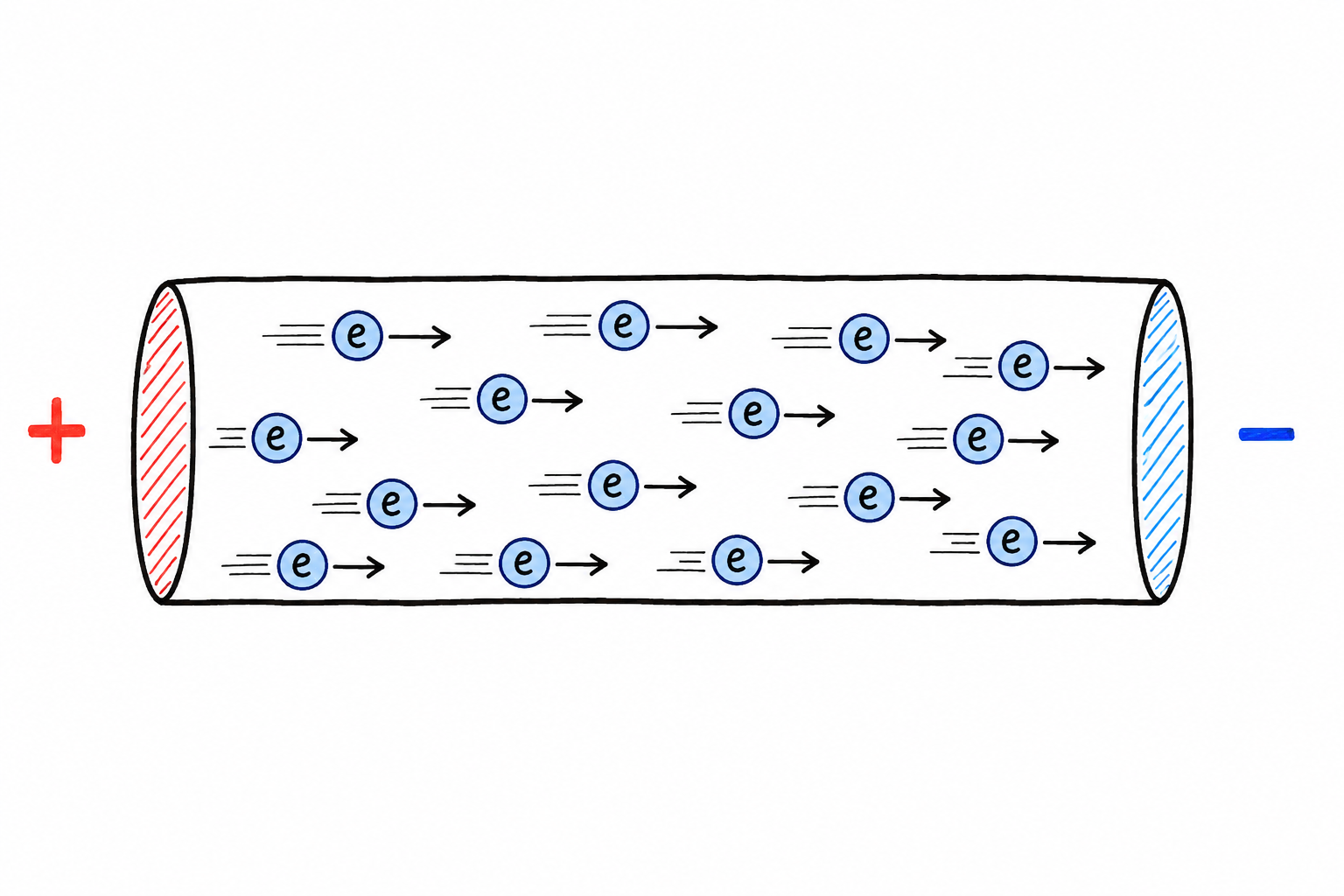 When we make them move in a directed way through a conductor – electric current is born.
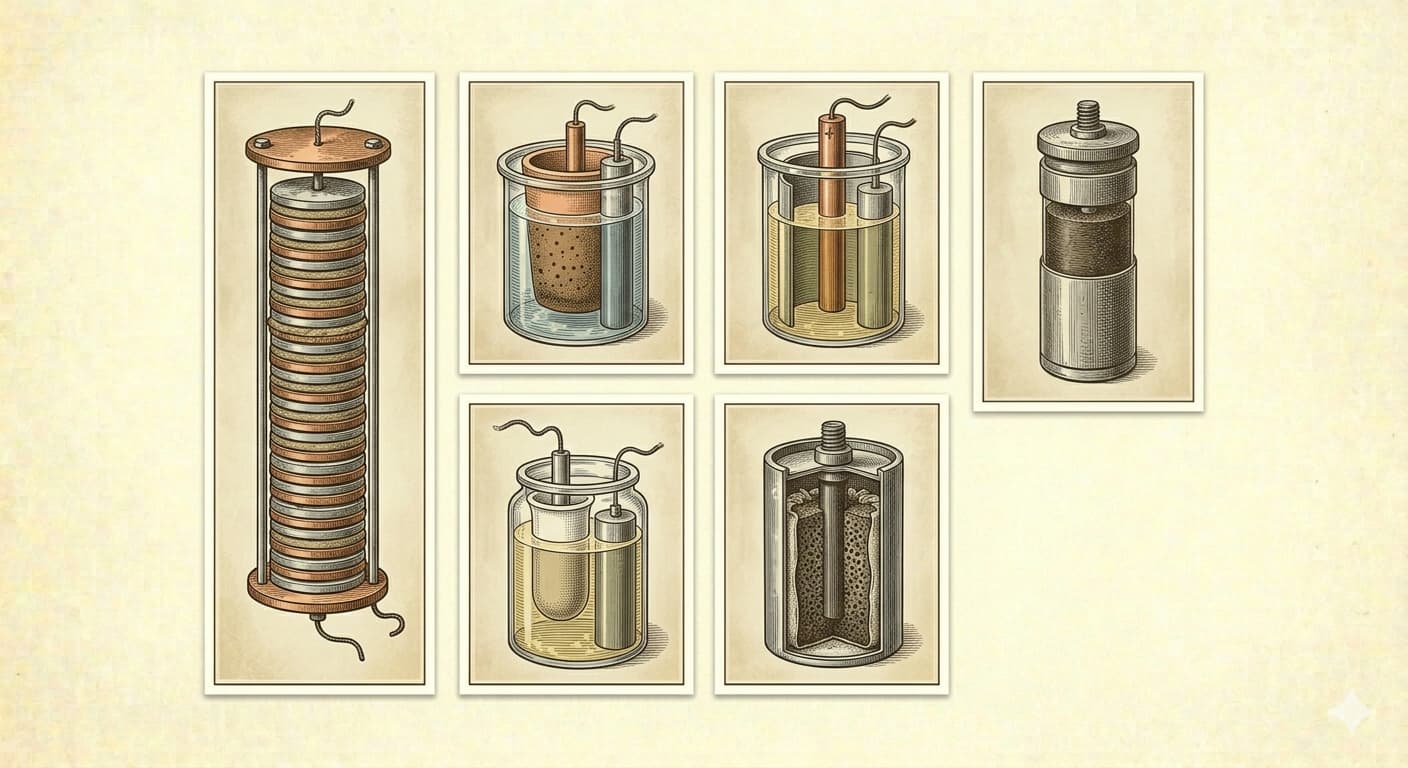
Once we finally had the first source of electric current, once this idea became clearer – the battery began to develop rapidly. Scientists tirelessly experimented with different materials and designs, trying to obtain a more stable and powerful energy source. In parallel, the first real electric circuits began to be developed.
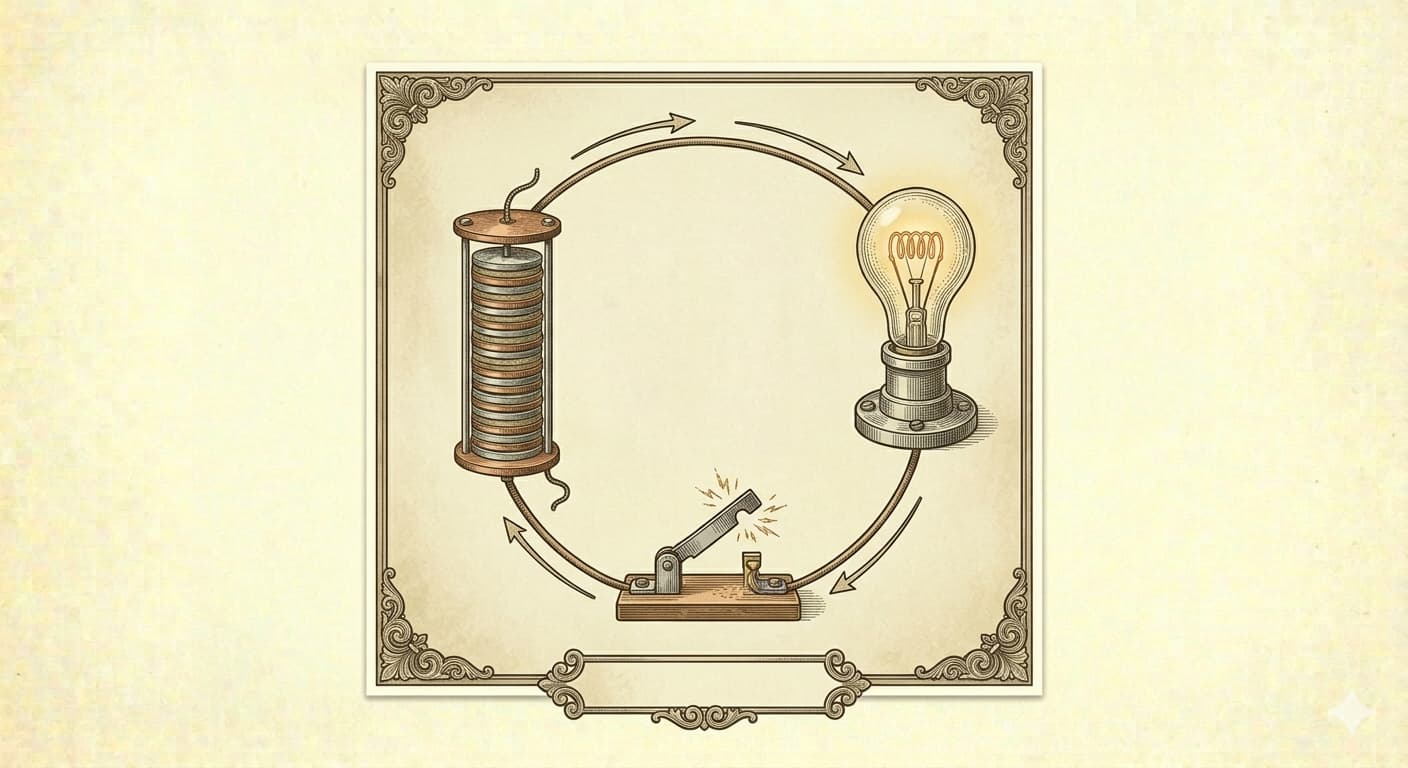
 When we connected both poles of the battery with a wire – positive and negative – the electrons gained their “path” and began moving through the conductor. Sounds simple, doesn’t it?
 But just then – new challenges appeared.
Batteries drained quickly, were expensive, created waste, and produced relatively weak direct current.
Of course, humanity didn’t give up on the battery. On the contrary – it was refined for decades. It was used then, and it is still used today. Only today, it has a different role.
The battery is excellent for mobile phones, watches, laptops, lamps, and countless other devices we use every day. Where we need portable, quiet, and practical energy – the battery is almost irreplaceable.
But for powering factories, trains, large machines, and entire cities – something much stronger was needed.
We needed an energy source that doesn’t drain after just a few hours of work.
A source that can power thousands, even millions, of devices for days, months, and years.
A source that can be produced in almost unlimited quantities.
At that moment, no one suspected that such a source even existed – and that the solution was already just around the corner.
No one could imagine that a few seemingly accidental discoveries would forever change the course of history.
Discoveries that would not only change how we produce electricity, but also how we build cities, travel, communicate, and live.
Discoveries that would launch industry, transport, communications, and technology.
Discoveries that would push humanity into the modern age.
And this was done by two eccentric physicists, one poor bookbinder’s apprentice, and one American who worked in a salt mine. In the end, two geniuses put the final seal on it all – by figuring out how to put those discoveries to the service of humanity.
This is not just a story about an epochal invention.
This part, too, can be written as a drama in several acts.
Act I – A physics class that changed the world – Ørsted’s experiment
After the battery came the first great new discovery – and it happened completely by accident. Just like with Galvani and the frog.
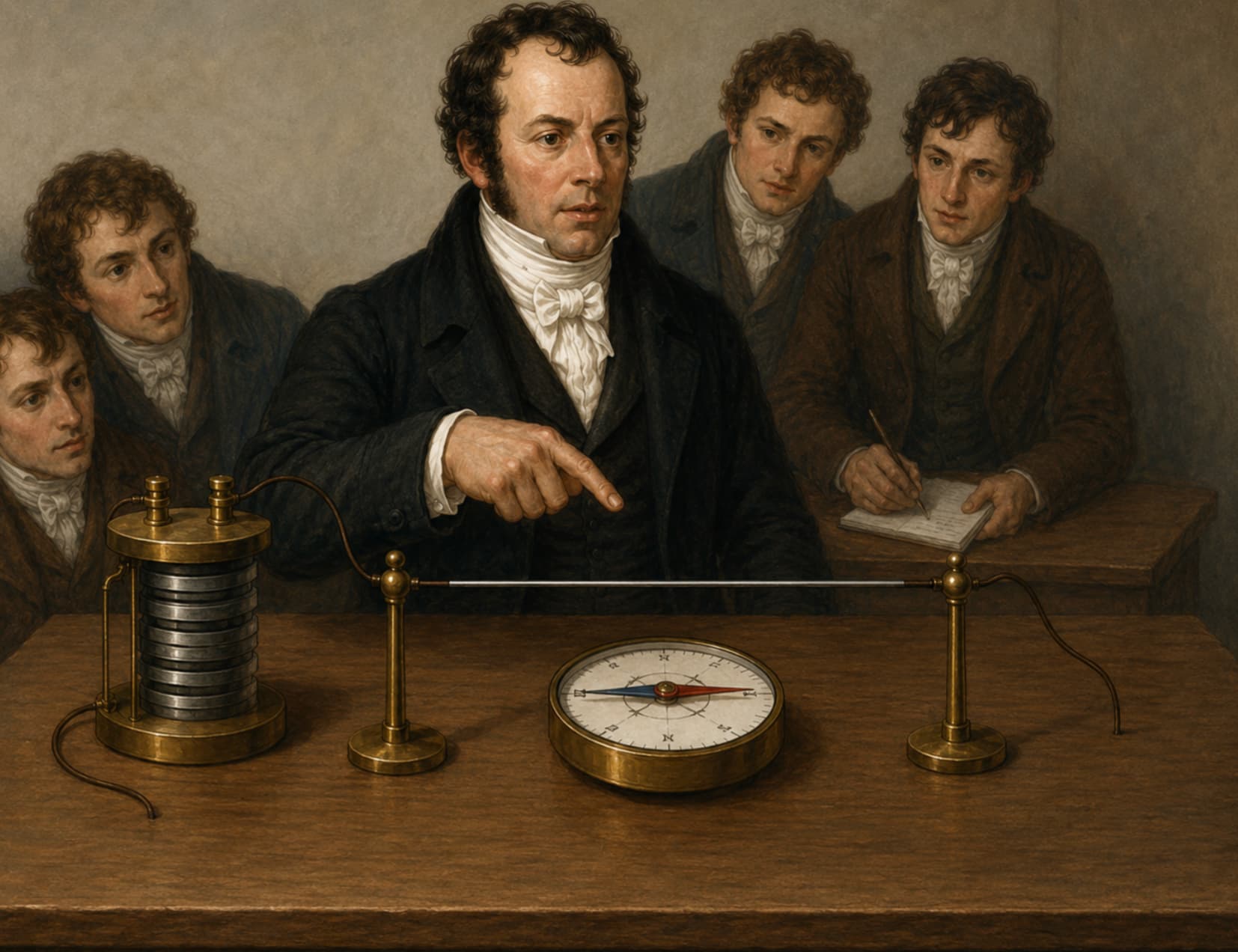
Hans Christian Ørsted was giving a lecture to his students. On his table, he had a battery, a conductor – and quite by accident, next to it, a small compass. He turned on the current.
One student said:
“Professor – the compass needle is moving.”
Ørsted looked at him and asked:
“Are you sure?”
They repeated the experiment.
The magnetic needle jumped every time – as soon as the current flowed.
Something no one suspected
Electric current was already understood at the time. They knew it created an electric field.
But this – this was something completely different.
The conductor through which current flowed was also creating a magnetic field. An invisible force that moved the compass needle.
An instrument designed to sense only Earth’s magnetism – was reacting to ordinary current.
Electricity and magnetism. Two phenomena that until then were believed to have nothing to do with each other – suddenly became inseparable.
The idea that set Faraday and Henry in motion
Just as Galvani gave the idea to Volta – Ørsted, with this discovery, opened the path for Faraday and Henry.
Between Act I and Act II
The news spread across Europe faster than any scientific publication before it.
And somewhere far from the grand university halls, in completely different worlds, two men read it – and felt the same question.
In London: Michael Faraday – the son of a blacksmith, a former bookbinder’s apprentice, a self-taught man who only gained knowledge by binding other people’s books.
In America: Joseph Henry – who as a boy worked in a salt mine to help his family survive the winter.
Neither of them was an academic. They had no titles, no laboratories.
They had only one question that wouldn’t leave them: If electricity creates a magnetic field… can a magnetic field create electricity?
The question was posed. Time began to tick.
Only ten years later – the answer would change our understanding of electrical energy forever.
But before that – let’s go to Act II.
Act II – Ampère and the birth of the electric motor
While Faraday was hunting for electricity from magnets for ten years, Ampère asked a completely different question:
What happens to a conductor carrying current – when you place it in a magnetic field?
Clash of invisible forces
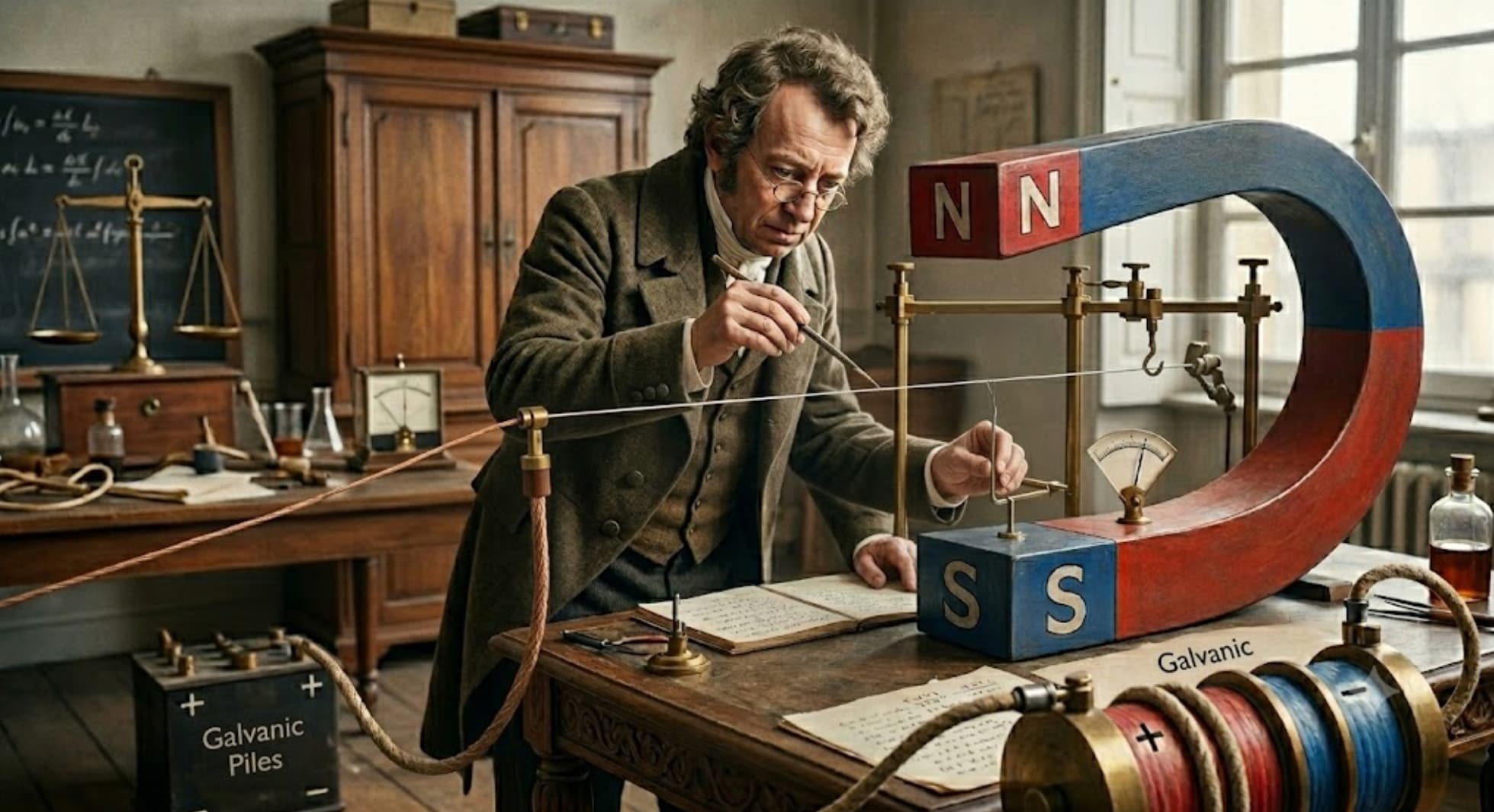
He took a strong horseshoe magnet and placed a current-carrying conductor between its poles.
The conductor moved – as if someone had pushed it.
Depending on the direction of the current, the magnet either attracted or repelled the conductor.
Ampère saw this. And he didn’t stop.
The loop that began to rotate
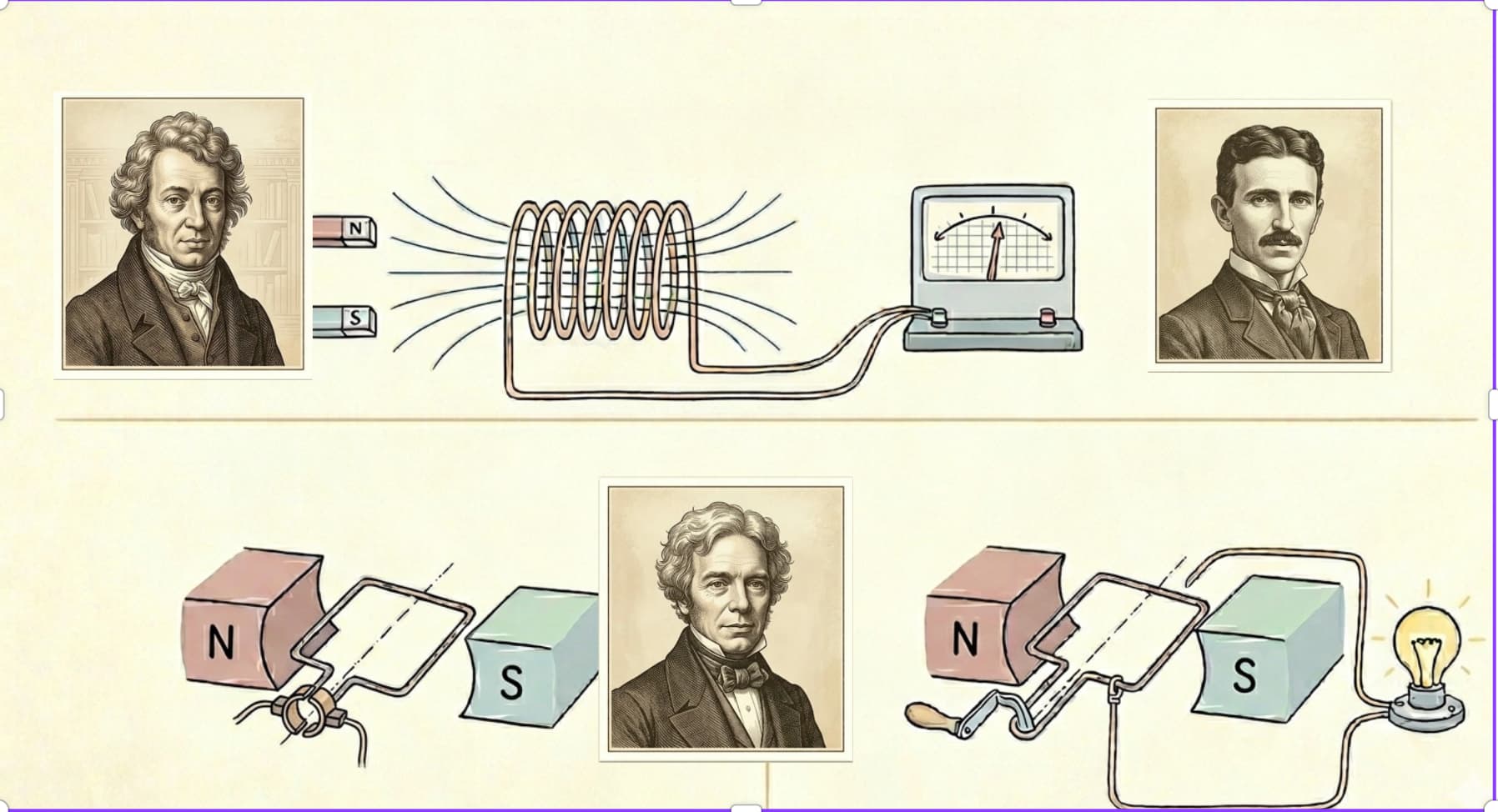
He bent the wire into a rectangular loop and placed it between the poles of the magnet.
What happened next – changed history.
Current flowed through one side of the loop in one direction, and through the other side in the opposite direction. The magnet pushed one side up, the other down. And because the direction of the current changed in rapid intervals – the loop began to rotate.
Continuously. Without stopping. It kept turning as long as the current flowed.
Electrical energy had been converted into mechanical energy.
Ampère probably didn’t even suspect at the time that he had just discovered the principle of the electric motor.
A simple principle. Unimaginable consequences.
On paper, it looks almost banal: two magnetic fields pushing against each other, and a loop spinning.
But imagine a world without that spin.
Without electric motors, there would be no electric trains – we would still be traveling by steam locomotives. Instead of trams, horse-drawn carriages would fill the streets. There would be no conveyor belts, elevators, fans, washing machines, or mixers.
From a small battery-powered toy to modern aircraft – everything relies on the same principle that Ampère discovered with a piece of wire and an old horseshoe magnet.
A simple idea. A clash of two invisible fields. And a world that – literally – began to turn.
Act III – The question that changed the world
Faraday’s question was simple yet fateful: If electricity can create magnetism – can magnetism create electricity?
Ten years of uncertainty
For ten years, Faraday tried – but couldn’t find the answer to this logical question.
He placed a magnet next to a conductor.
Nothing happened.
He tried a stronger magnet.
Again, nothing happened.
That didn’t make the electrons move in the conductor either.
He made a larger coil with many turns of wire.
He placed a magnet next to it.
Again, the same – not a single electron moved.
Year after year, experiment after experiment – nothing.
And then, almost by accident, he did one single thing.
The moment that broke the barrier
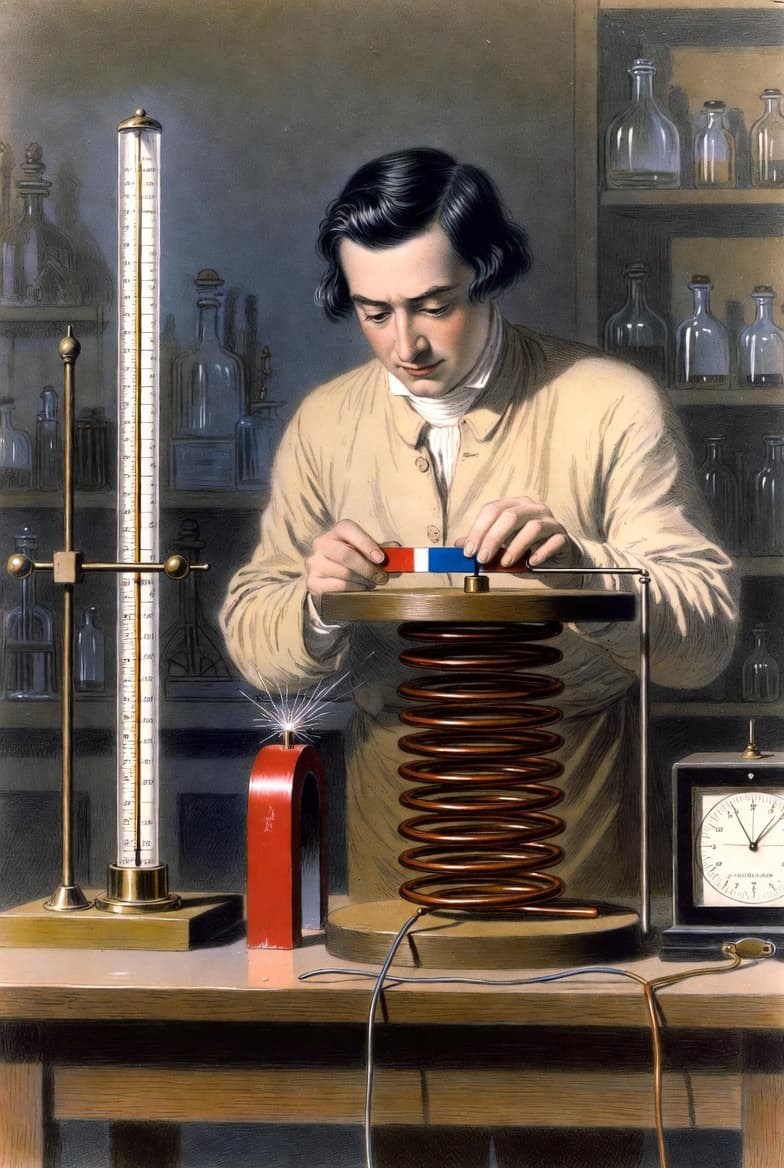
He began to move the magnet through the coil.
And the galvanometer needle moved. Current appeared in the conductor – not because the magnet stood next to it, but because it moved.
Faraday realized that the problem had never been the strength of the magnet.
It was movement.
A stationary magnet did nothing.
A magnet in motion – changed everything. Because movement changed the magnetic field next to the conductor.
When he pushed the magnet into the coil – current flowed in one direction.
When he pulled it out – it flowed in the opposite direction.
The needle moved left-right.
And just like that – not only did the electrons start moving – but alternating current was born.
The battery pushed electrons always in the same direction. Faraday’s moving magnet pushed them back and forth – and thus opened the door to something far more powerful.
Alternating current.
It was an epochal discovery. A discovery that would turn the world upside down.
And he wasn’t alone.
Two men. The same moment. Two continents.
While Faraday was working in London, Joseph Henry in America – completely independently – arrived at the identical conclusion.
One of the greatest discoveries in the history of science was discovered twice, simultaneously.
The principle that drives civilization
Faraday’s experiment was simple: You move a magnet next to a conductor – and current flows on its own. No acid or metal was needed. All that is needed is movement of a magnet next to an ordinary wire – for electric current to flow through it.
And immediately, the question arose: what can move the magnet?
Water. Steam. Wind. Bicycle pedals.
A person riding a bicycle turns the pedals, the magnet spins inside a coil – and the lamp on the handlebar begins to shine.
More than 90% of all electrical energy in the world is produced by the principle discovered by Faraday and Henry.
A preview of the Current War
But the story does not end here. On the contrary – it is only entering its most dramatic chapter.
The first electric motors and generators were built very simply, using the basic principle of the force between current and a magnet. Electric motors converted electrical energy into movement of a coil in a magnetic field.
The generator, on the other hand, is actually the inverse function of the electric motor – instead of current creating motion, the motion of a coil in a magnetic field began to produce electric current.
Finally, when humanity realized how valuable electricity was – the race began.
A real war. A war fought by geniuses, secret agents, and corporations with million-dollar stakes.
It was called the Current War. And just then, two names that history will forever remember step onto the stage: Edison and Tesla.
You can read more about the Current War at the link below: https://aziza-physics.com/en/the-encounter-of-two-geniuses-who-led-humanity-into-the-modern-age/
Names that live on today
The names of all the mentioned scientists live on today, because Edison and Tesla are not the only ones forever inscribed in the history of electricity. They are: Galvani, Volta, Ørsted, Ampère, Faraday, Henry, and Tesla.
Today, we name our units of measurement after them:
| Unit | For what | Named after |
|---|---|---|
| Volt (V) | voltage | Volta |
| Ampere (A) | current | Ampère |
| Farad (F) | capacitance | Faraday |
| Henry (H) | inductance | Henry |
| Tesla (T) | magnetic induction | Tesla |
Tesla’s name is now proudly carried by cars that race down roads without a single drop of gasoline.
They did not build empires of stone or gold.
They tamed one of the fundamental forces of nature – the connection between electric and magnetic force, i.e., the electromagnetic force. They made those invisible forces drive the entire world today.
AzizA